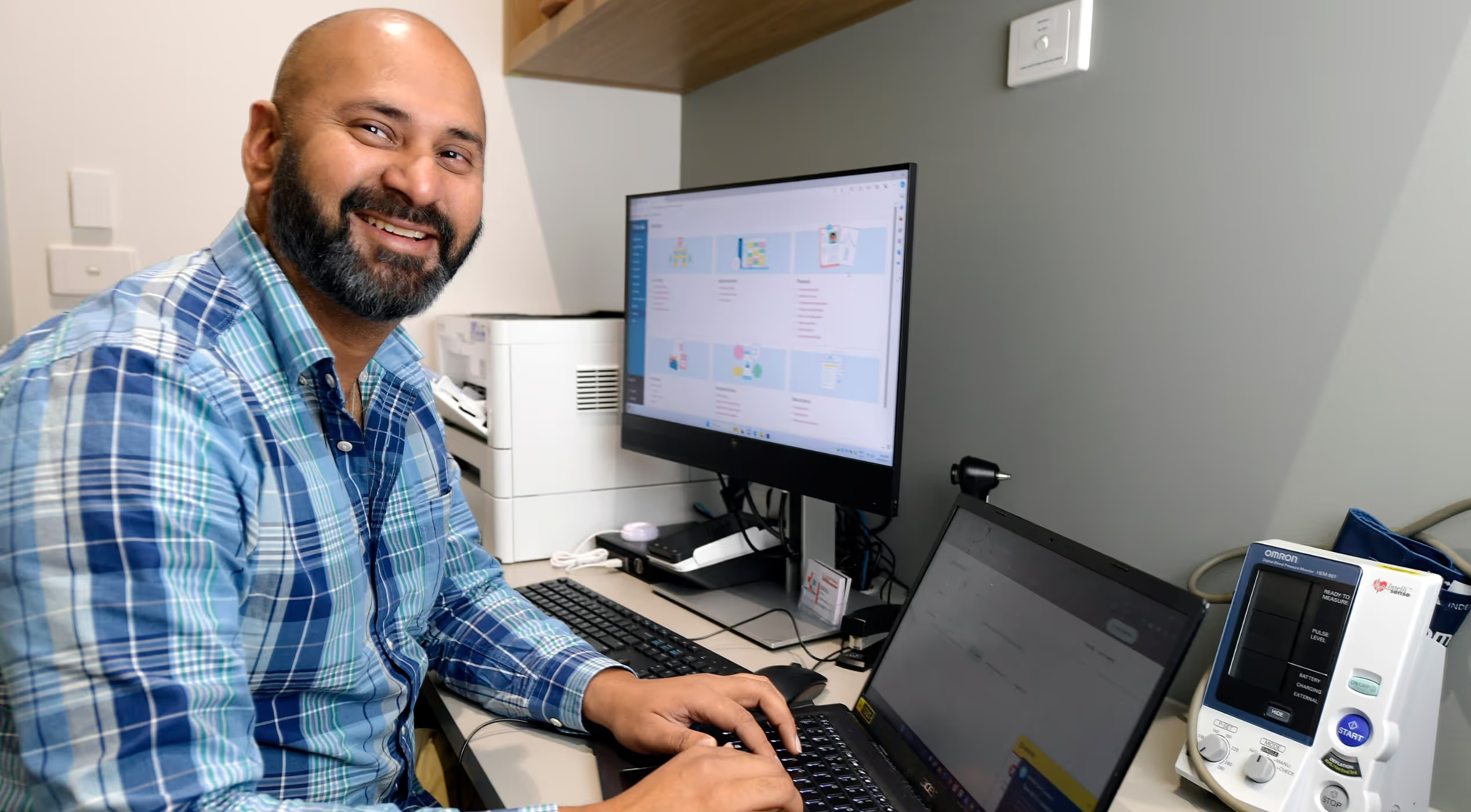
Surgical Summary Template
Surgical summary notes provide a comprehensive overview of operative procedures, documenting preoperative diagnoses, technical aspects of the surgery, anatomical findings, and postoperative care plans for patients undergoing invasive interventions.
These detailed operative records serve as crucial medicolegal documentation while establishing a clear communication pathway between the surgical team and subsequent healthcare providers managing the patient's recovery.
They directly impact patient care by guiding postoperative management decisions, facilitating appropriate follow-up planning, and providing essential reference information for future surgical interventions or complications that may arise in the healing process.
Why Are Surgical Summary Notes Important?
Surgical summary notes facilitate critical information exchange between surgeons, anesthesiologists, post-operative care teams, and consulting specialists to ensure continuity of care.
These comprehensive records provide essential documentation that satisfies medical-legal requirements, insurance verification, and hospital accreditation standards for surgical procedures.
Well-structured surgical summaries contribute to improved patient outcomes by clearly documenting the procedure performed, intraoperative findings, and specific post-operative care instructions.
How to Write Surgical Summary Notes
Begin by documenting patient identifiers, procedure type, surgical team members, anesthesia used, and the chronological sequence of the surgical intervention from incision to closure.
Include detailed sections covering preoperative diagnosis, intraoperative findings, technical procedure details, complications encountered, specimen handling, estimated blood loss, and immediate post-operative status.
Maintain clarity and precision by using standardized surgical terminology, avoiding ambiguous abbreviations, and organizing information in a logical sequence that follows the natural progression of the surgical event.
Key Components of Surgical Summary Notes
Essential elements include patient demographics, preoperative diagnosis, procedure performed, surgical team members, anesthesia details, intraoperative findings, technical procedure description, specimen handling, estimated blood loss, complications, implants used, and immediate post-operative plan.
The intraoperative findings section serves to document actual pathology discovered during surgery, which may confirm or modify the preoperative diagnosis and justify the surgical approach taken.
When documenting the technical procedure, avoid vague descriptions of surgical techniques, failing to specify anatomical landmarks, or omitting critical measurements of excised tissue or implanted hardware.
Tips for Writing Effective Surgical Summary Notes
Focus on objective observations using precise anatomical terminology while ensuring all critical decision points during surgery are clearly explained with supporting rationale.
Maintain patient confidentiality by following HIPAA guidelines when sharing surgical summaries, particularly when including intraoperative photographs or when cases involve sensitive procedures.
Implement specialty-specific surgical templates with standardized sections, dropdown menus for common procedures, and integrated image annotation capabilities to streamline documentation while ensuring comprehensiveness.
Automating Surgical Summary Notes
Automating surgical documentation through dictation systems, structured templates, and AI-assisted transcription can reduce documentation time by up to 50% while improving accuracy and standardization across surgical specialties.
When implementing automated systems, incorporate surgical specialty-specific vocabulary, procedure codes, and common implant databases while providing training to ensure surgeons can effectively customize templates to their practice patterns.
3 Common Questions About Surgical Summary Notes
How detailed should the description of surgical technique be in the operative report?
The surgical technique description should include sufficient detail that another surgeon could reproduce the procedure, including specific instruments used, anatomical approach, key measurements, suture materials, and any modifications to standard technique necessitated by patient-specific factors.
What's the best way to document unexpected findings or complications in a surgical summary?
Document unexpected findings or complications objectively with precise timing, clear description of the issue encountered, immediate actions taken to address it, consultation with other specialists if applicable, resulting changes to the surgical plan, and any impact on the patient's expected recovery or prognosis.
How soon after surgery should the operative report be completed?
The operative report should ideally be completed immediately following surgery while details are fresh in the surgeon's mind, with most facilities requiring completion within 24 hours of the procedure to ensure accurate information is available to the post-operative care team.
Final Thoughts on Surgical Summary Notes
Comprehensive surgical documentation serves as a critical communication tool, legal record, quality improvement resource, and educational reference that supports optimal patient care across the entire perioperative journey.
Implementing specialty-specific surgical templates with integrated image capture capabilities, voice recognition technology, and automated coding assistance can dramatically improve documentation efficiency while ensuring regulatory compliance and supporting better clinical outcomes.
Orthopedic Surgeon Post-Operative Notes
Surgeon: Dr. Emily Richardson, MD
Date: 20th November 2024
Patient: Sarah Thompson, Patient ID: 54321
Procedure: Right Total Knee Arthroplasty (TKA)
Assistant(s): Dr. Robert Lee, MD (First Assistant), Sarah Green, RN (Scrub Nurse)
Presenting Complaint:
The patient presented with severe right knee pain, instability, and decreased range of motion due to osteoarthritis. This pain had progressively worsened over the past year, leading to difficulty with daily activities and ambulation.
History of Presenting Condition:
Sarah Thompson, a 62-year-old female, has a history of osteoarthritis in her right knee. She has tried conservative management, including physical therapy, non-steroidal anti-inflammatory drugs (NSAIDs), and corticosteroid injections. Despite these treatments, her symptoms persisted, and she was unable to maintain an active lifestyle. After discussing treatment options, total knee arthroplasty was recommended and consented.
Surgical Findings:
• The femoral and tibial articular surfaces were significantly degenerated with grade 4 chondromalacia.
• Severe narrowing of the medial joint space was noted, with varus alignment of the knee.
• There were no signs of infection or other significant pathology.
Procedure Performed:
1. Incision and Exposure:
A midline incision was made over the knee, followed by a medial parapatellar approach to expose the joint.
2. Preparation of the Femur:
The femoral bone was resected using an oscillating saw to prepare the femoral condyles for the prosthesis. The posterior femoral cut was performed, and the resection was confirmed with fluoroscopy.
3. Preparation of the Tibia:
The tibial plateau was then resected to create a flat surface for the tibial component.
4. Patellar Preparation:
The patella was carefully inspected, and a small trochlear groove was prepared to align the prosthesis with the femoral component.
5. Implantation:
The femoral and tibial components were carefully implanted and cemented into place. The patella was resurfaced with a polyethylene component.
6. Closure:
The knee was thoroughly irrigated, and hemostasis was achieved. The incision was closed in layers using absorbable sutures. A sterile dressing was applied.
Implants Used:
• Type of Implant: Zimmer Biomet Persona® Knee System
• Location: Right femoral and tibial components, right patella resurfacing
• Serial/LOT Number: Femoral - 11234567, Tibial - 7654321, Patella - 9876543
Anesthesia Details:
• Type of Anesthesia: General anesthesia with regional nerve block (femoral block)
• Anesthetics Used: Propofol (200mg), Fentanyl (50mcg), Bupivacaine (15ml for block)
• Anesthesia Team: Dr. Mark Johnson (Lead Anesthesiologist), Nurse Linda Cooper (Anesthesia Assistant)
• Monitoring and Complications: Continuous ECG, pulse oximetry, and blood pressure monitoring. No intraoperative complications or reactions to anesthesia.
Post-Operative Diagnosis:
• Right knee osteoarthritis, advanced degenerative changes with significant functional impairment, requiring total knee arthroplasty.
Treatment Given:
• Post-operative pain management included IV morphine for initial 24 hours, followed by oral opioids (Oxycodone 5mg every 4-6 hours as needed) and acetaminophen for pain control.
• Prophylactic antibiotics (Cefazolin 1g IV) were administered to prevent infection.
Post-Operative Instructions:
• Activity:
• Weight-bearing status: Non-weight-bearing for the first 2 weeks using crutches for support.
• Gradual introduction to partial weight-bearing after 2 weeks as tolerated, progressing to full weight-bearing by 6 weeks post-op.
• Use of knee brace for the first 4 weeks during ambulation for additional support.
• Avoid high-impact activities such as running for at least 6 months.
• Medications:
• Pain management: Continue oral Oxycodone and transition to NSAIDs after 1 week as needed for pain relief.
• Blood thinning: Aspirin 81mg daily for 4 weeks for DVT prophylaxis.
• Stool softener (Colace) prescribed to avoid constipation from pain medications.
• Wound Care:
• Keep the surgical area clean and dry.
• Change the dressing every 48 hours, or sooner if soiled.
• Watch for signs of infection, including increased redness, swelling, or discharge. If these occur, contact the clinic immediately.
• Keep the incision site elevated to reduce swelling.
• Follow-Up:
• First follow-up appointment in 2 weeks for wound check, suture removal, and evaluation of mobility.
• Additional follow-up at 6 weeks for a full assessment of knee function, mobility, and radiographic evaluation.
• Physical Therapy:
• Start physical therapy within 48 hours post-operatively to begin gentle range-of-motion exercises.
• Focus on quadriceps strengthening, knee flexibility, and gait training.
• Gradual progression of weight-bearing exercises will be introduced as tolerated.
• Signs to Watch For:
• Redness, swelling, or warmth around the incision site (possible infection).
• Increased pain, especially if not relieved by medication.
• Sudden shortness of breath, chest pain, or swelling in the lower legs (possible signs of DVT or pulmonary embolism).
Reassessment:
• The patient will be reassessed in 2 weeks for wound healing and mobility. At this time, we will also evaluate their ability to progress to partial weight-bearing and determine any adjustments needed for physical therapy.
Goals for Next Appointment:
• Expected progress:
• Wound healing with no signs of infection.
• Reduced pain and swelling.
• Improved knee mobility and range of motion (aiming for at least 80° of flexion).
• Patient should be able to bear weight with assistance, progressing to partial weight-bearing.
Additional Notes:
• The patient expressed concern regarding the length of recovery and potential for long-term mobility. We discussed the importance of adhering to the post-operative rehabilitation plan and the gradual return to normal activities.
• We advised Sarah to maintain close communication with the physical therapy team to ensure progress and address any challenges during the recovery process.
Post-Operative Patient Instructions
To ensure a smooth recovery following your Right Total Knee Arthroplasty, please adhere to the following instructions:
• Activity Restrictions: Non-weight-bearing for the first 2 weeks. Gradually progress to partial weight-bearing after 2 weeks.
• Medication Guidelines: Continue pain management as prescribed. Take pain medication with food to avoid stomach upset.
• Wound Care: Keep the incision clean and dry. Change the dressing every 48 hours and keep the area elevated to reduce swelling.
• Signs of Complications: Watch for redness, swelling, or excessive drainage from the wound site, as these may indicate infection.
• Physical Therapy: Start physical therapy as soon as directed by your therapist to regain knee strength and flexibility.
• Diet: Follow a balanced diet, and stay hydrated. Avoid excessive salt intake, as this can cause swelling.
• Emergency Contact: If you experience severe pain, unexpected swelling, or difficulty breathing, contact our office immediately or visit the emergency department.
Please follow these instructions closely, as it will help promote the healing process. If you have any questions or concerns, do not hesitate to contact our office.
Now it’s your turn.
Use this template in
PatientNotes
Notes, Letters & Reports